
Legal Services for Real Estate Investors in the Czech Republic: ARROWS Guide

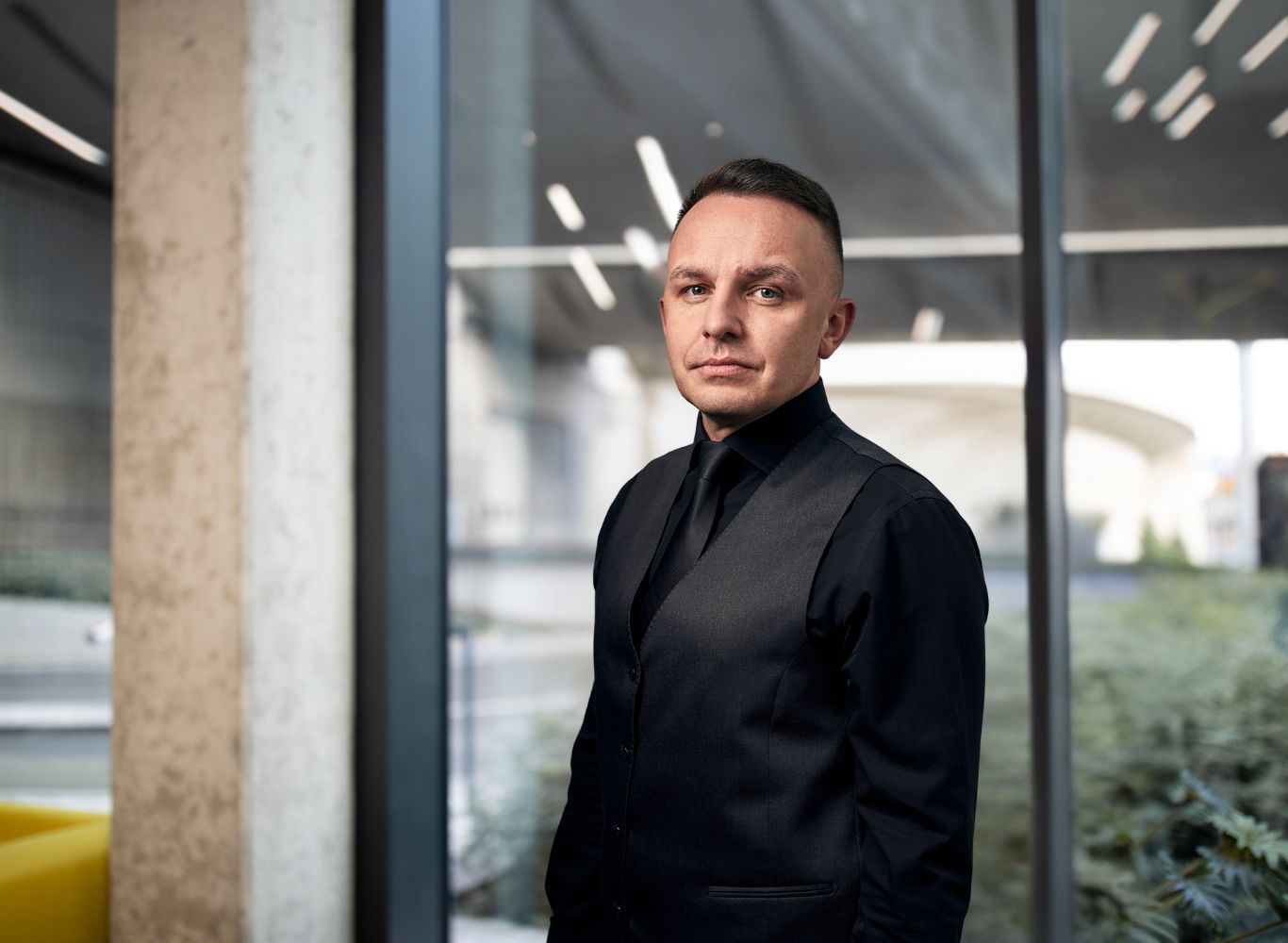
JUDr. Jakub Dohnal, Ph.D., LL.M.
25.2.2026 |
ARROWS law firm
Real estate investing promises stable income and long-term growth in asset value, but behind it lies a complex web of legal, tax, and administrative obligations under Czech law—one that can lead some investors into financial difficulties or legal disputes. In this guide, we will show you what legal services ARROWS, a Prague-based law firm, provides and how they can help you avoid mistakes that can cost millions.
Article contents
Quick summary
- Tax optimisation is essential: Choosing the acquisition structure (individual vs. s.r.o.) and correctly applying depreciation or deductible expenses can save you tens of thousands of Czech crowns per year. ARROWS, a Prague-based law firm, can help structure the acquisition to match your long-term goals.
- Legal risks in the Land Registry and contracts: Hidden defects, unregistered easements, occupancy approval issues, or illegal constructions can devalue your asset by millions. A professional legal review (due diligence) will identify these issues in time.
- Lease relationships require detailed contractual protection: Poorly drafted lease agreements, non-paying tenants, and legal shortcomings in defect-claim procedures cause investors losses. The Czech legal team at ARROWS, a Prague-based law firm, will ensure you are protected by high-quality contractual documentation.
- Financing and insurance are not just administration: Mortgage financing and property insurance are key elements of a successful investment strategy.
Why investors need specialised legal services
Real estate investing is not only about finding the right location and negotiating a good price. It is a complex legal and financial process where a single mistake can mean losses of hundreds of thousands or millions of Czech crowns and years of legal disputes. Real estate investors face many risks—from additional tax assessments under Czech tax rules to legal disputes with tenants, from hidden defects in the property to issues involving pledges and enforcement (execution) proceedings.
Most often, we encounter situations where an investor entered into a transaction without sufficient legal preparation, signed documents without attorney review, and later discovered that the property had hidden defects. It is also common for a tenant to stop paying, leaving the investor in a legally difficult position to unwind. All of this could have been prevented with appropriate legal advice.
Tax aspects of real estate investing in the Czech Republic
Tax optimisation is one of the most important parts of a successful investment strategy and also an area where an investor can save—or, conversely, unnecessarily lose—significant amounts. The choice between investing as an individual and through a limited liability company (s.r.o.), the correct application of depreciation, and proper reporting of income and expenses—all of this has a fundamental impact on your profit and tax burden under Czech legislation.
Acquisition structure: individual versus s.r.o.
This decision has long-term financial consequences. Individuals can use the so-called time test for income tax exemption—if they own the property (which is not included in business assets) for at least 10 years, the subsequent sale is fully exempt from tax under Act No. 586/1992 Coll., on Income Taxes. Limited liability companies do not have this exemption and always tax the profit from a sale.
It is also important to understand how depreciation works. An individual may claim depreciation if they do not apply lump-sum expenses, but instead keep tax records or accounting. However, if you choose a structure through an s.r.o., keeping accounting records is mandatory and depreciation is a standard tool for reducing the tax base. For example, for an s.r.o. with rental income of CZK 120,000 per year and depreciation of CZK 100,000, the tax base would be reduced to CZK 20,000.
Depreciation and its tax effectiveness
Whether you own the property through an s.r.o. or as an individual applying actual expenses, you have the option to apply so-called straight-line or accelerated depreciation. Depreciation works by deducting a certain portion of the acquisition cost from the tax base each year until the property is fully depreciated. This allows you to reduce the tax burden in each tax period.
However, Czech tax legislation contains many details and exceptions. For example, the Income Taxes Act includes detailed rules on which immovable assets can be depreciated, how the acquisition cost is determined, and when depreciation can be interrupted. The attorneys at ARROWS, a Prague-based law firm, in cooperation with tax advisors, routinely handle such structuring for clients and know how to optimise the tax regime to fit your specific situation. Write to us at office@arws.cz.
Mortgage interest: the difference between owner-occupied housing and an investment
This is where investors often make mistakes. If you are an individual and have a mortgage for your own housing needs, you can deduct interest from the tax base. However, for an investment property (rental), this deduction cannot be applied under Section 15 of the Income Taxes Act.
For an investment property, however, mortgage interest is a tax-deductible expense (cost) under Section 9, if you apply actual expenses. In that case, you can reduce rental income by the interest paid in full. ARROWS, a Prague-based law firm, will ensure you claim these expenses correctly under Czech tax rules.
Related questions on the tax aspects of investments
1. Can I deduct expenses for maintenance and repairs of the property?
Yes, if you apply actual expenses (not a lump sum) for a rented property, you can deduct real expenses for maintenance, repairs, insurance, real estate tax, and other operating costs. However, Czech law distinguishes between ordinary repairs (an expense in the given year) and technical improvements (reconstruction above a certain threshold), which must be depreciated over time. You must have documentation for all expenses.
2. If I own multiple properties, how are they taxed?
Rental income from all properties is aggregated (under Section 9 of the Income Taxes Act). If you have rent of CZK 80,000 from one property and CZK 70,000 from another, the total income is CZK 150,000. Against this, you may apply either lump-sum expenses (30% of income, max. CZK 600,000) or actual expenses for each property (including depreciation). Proper records are important.
3. What are the tax implications of selling a property?
If you are an individual and the property was not included in business assets, the sale is exempt from tax after the time test has elapsed (10 years for properties acquired after 1 January 2021, 5 years for earlier acquisitions). Otherwise (or when selling through an s.r.o.), the profit is taxed (rate 15% or 23% for individuals, 21% for an s.r.o.).
Legal risks hidden in real estate
When deciding to purchase an investment property, it is very easy to focus primarily on the price, the level of potential rent, and the location. The reality, however, is more complex. Cadastral maps, title deeds, construction documentation, legal defects, and limitations of ownership rights often conceal risks that can increase enormously during the period of ownership. The attorneys at ARROWS, a Prague-based law firm, deal with precisely these types of cases every day and know which details to watch for under Czech law. Email us at office@arws.cz.
Legal due diligence of real estate
Legal due diligence (so-called “due diligence”) is a systematic legal audit of a property aimed at uncovering hidden risks, legal defects, and potential future disputes in the Czech Republic. It is not merely a review of the Czech Real Estate Cadastre. The review includes verification of acquisition titles, checking the history of transfers, identifying mortgages and enforcement proceedings, analysing zoning and planning documents, and reviewing all relevant contracts.
The Czech Real Estate Cadastre may tell you who is registered as the owner, but it will not protect you from a situation where the access road belongs to someone else. In practice, we also often encounter “black buildings” (unauthorised structures)—illegally added balconies, garages, or pergolas. Legalising such structures under the new Czech Building Act can be complex and costly; in extreme cases, an order to remove the structure may even be issued.
Related questions on legal risks in real estate
1. How can I tell whether a property has an issue with construction documentation?
Compare the status in the Czech Real Estate Cadastre and the actual condition with the records held by the local Building Authority. If the house has a different floor plan in the Cadastre or a garage is missing from the registration, this is a warning sign. Request complete project documentation verified by the authority (building passport) from the seller.
2. Who is liable for defects the seller did not disclose?
Under Act No. 89/2012 Coll., the Civil Code, the seller is liable for defects that the item has at the time the risk of damage passes (upon handover), even if they become apparent only later (hidden defects). The buyer may claim a price reduction or, in serious cases, withdraw from the contract. Claims for defects in real estate can be asserted up to 5 years from acquisition under Czech law. However, enforceability in Czech courts can be demanding, which is why prevention is better.
3. Is legal due diligence worth the money?
Absolutely. The cost of due diligence is typically in the thousands to the lower tens of thousands of Czech crowns, but it can save millions by avoiding the purchase of a property with a legal defect, an illegal structure, or without legally secured access.
Easements and access rights
An easement (servitude) restricts the property owner for the benefit of someone else. For example, a neighbour’s right to pass across your land or the right to run utility networks. If an easement is not properly registered in the Czech Real Estate Cadastre but exists (e.g., by prescription or by operation of law), you may later face unexpected complications.
When purchasing real estate, it is essential to verify:
- Whether access to the property is legally secured.
- Whether the property is encumbered by third-party rights (e.g., lifetime use).
- Whether there are tenancy relationships attached to the property that transfer to the new owner under Czech law.
The attorneys at ARROWS, a Prague-based law firm, can help you prepare detailed legal due diligence and structure the purchase agreement so that it protects you. Email us at office@arws.cz.
Construction documentation and use of the building
A building may be used only for the purpose defined in the occupancy permit decision (or consent). If you purchase a property that has been altered without a permit or is used contrary to the occupancy approval (e.g., residential living in non-residential premises), you expose yourself to the risk of a fine from the Czech Building Authority and a prohibition on use.
We also encounter properties that are not compliant with the zoning plan. The zoning plan determines what may be built on a given plot in the Czech Republic. If you buy land intending to build, but the zoning plan does not allow it or plans a motorway nearby, the investment may be devalued. In practice, these issues often surface only when the investor wants to renovate or sell the property.
|
Risks and sanctions |
How ARROWS helps (office@arws.cz) |
|
Illegal construction or non-compliance with the zoning plan: An order to remove the structure, fines under the Czech Building Act (up to millions of CZK), inability to legalise, and devaluation of the investment. |
Legal due diligence and documentation analysis: ARROWS will review the legal status, verify compliance with the zoning plan, and identify risks before the purchase. |
|
Missing access rights: Inability to legally access the land, court disputes over a necessary access route, inability to obtain a building permit. |
Cadastral analysis and negotiations: ARROWS will verify that access is secured. If it is missing, we will help negotiate an easement or the purchase of a share in the access road and ensure proper legal protection in the purchase agreement. |
|
Occupancy approval deficiencies: The property cannot be legally rented for residential purposes, fines for use contrary to the approved purpose, issues with insurance coverage and claims. |
Verification of permitted use: ARROWS will verify the occupancy approval status. If the documents do not match, we will assist with the process of re-approval or change of use in cooperation with the authorities. |
|
Unregistered liens or debts: Transfer of debts to the new owner, risk of enforcement against the purchased property. |
Protection in the purchase agreement: ARROWS will ensure that the purchase price is released only after liens and debts are removed (escrow of funds) and will set contractual penalties for the seller in case of breach of obligations. |
Real estate financing and legal aspects of a mortgage
A mortgage is not only a financial product but also a binding legal relationship that limits your ownership rights under Czech law. The mortgage agreement grants the bank strong powers, including the ability to sell your property if you stop making repayments.
Mortgage financing terms for investors
The rules for providing mortgages are regulated by the Czech National Bank (ČNB) through indicators such as LTV (loan-to-value) and DTI (debt-to-income). For investment properties, banks often apply stricter rules than for owner-occupied housing. Typically, a higher share of own funds is required, and the bank assesses whether future rent will cover the loan instalment.
If the rent does not cover the instalment and you must subsidise the loan from other income, the bank will take this into account when assessing your creditworthiness. The legal documentation for a loan for an investment property may also include specific covenants (conditions), such as an obligation to maintain a certain occupancy rate or a prohibition on further indebtedness.
ARROWS specialists in Development & construction law
.png)
Legal framework of a mortgage and pledge (mortgage) rights
To secure the loan, the bank establishes a pledge (mortgage) right over the property, which is registered in the Czech Real Estate Cadastre. This means that the property cannot be sold (transferred to another person) or further encumbered without the bank’s consent. A prohibition on disposal and encumbrance is also often established as an in rem right.
If you fall into arrears with repayments, the bank may, after accelerating the loan, propose the sale of the property (by auction or by a private sale). In the event of enforcement proceedings in the Czech Republic, the bank, as a secured creditor, has priority to be satisfied from the proceeds of the sale.
Property insurance as part of a mortgage
Banks require the assignment of insurance proceeds in their favour. This means that in the event of an insured event (fire, flood), the insurer will pay the money primarily to the bank to cover the debt, not to you.
A key risk is underinsurance. If the property is insured for CZK 2 million (e.g., the amount of the mortgage), but its reinstatement value is CZK 4 million, in the event of a total loss the insurer may reduce the payout proportionally due to underinsurance. Contracts should include indexation of the insured sum to reflect rising construction labour and material costs.
Related questions on mortgage financing
1. Can I take out a mortgage as a self-employed person (OSVČ)?
Yes, but banks assess OSVČ income in a specific way, often based on the tax base from the tax return rather than turnover (unless you use the flat-rate tax regime or a turnover-based mortgage).
2. What happens to the mortgage when the property is sold?
The mortgage cannot be automatically transferred to the buyer without the bank’s consent. Most commonly, the mortgage is repaid from the purchase price and the mortgage lien is removed, or the buyer takes out a new mortgage with the same bank.
3. What risks arise if I stop paying?
The bank will accelerate the loan (demand immediate repayment of the entire amount). Penalty interest and contractual penalties follow. If payment is not made, the bank will enforce the collateral. A forced sale in Czech enforcement proceedings is usually below market price.
Property management and lease relationships
Securing stable returns requires flawless lease agreements. ARROWS’ Czech legal team deals with disputes every day that could have been avoided with high-quality documentation.
Lease agreement – the key legal document
A high-quality lease agreement must include not only the basic essentials (who, what, for how much), but also solutions for crisis situations. It must clearly define:
- The amount of the security deposit.
- Allocation of service charges and how they are settled.
- Maintenance obligations – what the tenant pays (minor repairs) and what the landlord pays.
Many downloadable template agreements are outdated or invalid under Czech law. For example, it is not possible to validly agree a contractual penalty in an unreasonable amount or to prohibit a tenant from keeping a pet (if it does not cause disproportionate inconvenience).
Landlord protection and dealing with non-paying tenants
Non-payment of rent is an investor’s nightmare. Under the Czech Civil Code, you may terminate the lease for a gross breach of obligations. If the tenant fails to pay for 3 months, you may terminate without a notice period. Even so, you must first call on the tenant to remedy the breach.
If the tenant does not move out voluntarily, you must not evict them by force or change the locks (you risk criminal prosecution for unlawful interference with the inviolability of the home). You must file an action for eviction with the court. This process can take months or years in Czech courts, which is why prevention and tenant screening are crucial.
Claims for defects
The tenant is entitled to a rent reduction if defects of the property prevent proper use (e.g., non-functioning heating in winter, noise from reconstruction works in the building). The landlord must remedy defects without undue delay. Disputes can be prevented by a handover protocol with photo documentation at the start of the tenancy, capturing the condition of the apartment.
|
Risks and sanctions |
How ARROWS helps (office@arws.cz) |
|
Invalid lease agreement: The agreement does not contain statutory requirements, the lease becomes indefinite, and rent increases cannot be applied (an inflation clause must be specific under Czech law). |
Preparation of a professional lease agreement: ARROWS will prepare a watertight, tailor-made agreement that addresses inflation, repairs, the deposit, and termination in line with current Czech case law. |
|
Non-paying tenants and lengthy eviction: Loss of rent, utility costs consumed by the tenant, lengthy court dispute. |
Legal representation and debt recovery: ARROWS will ensure a formally correct termination notice, a pre-action demand, and representation in court proceedings for eviction and payment of outstanding rent. |
|
Property damage: The tenant destroys furnishings and the deposit is not sufficient. |
Recovery of damages: We will assist with legal recovery of damages beyond the deposit and recommend appropriate tenant liability insurance as a contractual condition. |
|
Illegal short-term rentals (Airbnb): Fines from the building authority, complaints from the owners’ association (SVJ), breach of house rules. |
Setting the rules: We will advise how to operate short-term rentals legally in compliance with municipal regulations and the Czech Trade Licensing Act. |
Property insurance
Insurance protects not only the value of the asset, but also you against liability for damage.
Types of insurance
- Building insurance : Covers the structure (walls, roof) against natural disasters.
- Household contents insurance : Covers equipment (furniture, appliances). In a rented apartment, the tenant should ideally arrange it for their own property.
- Property owner’s liability insurance : Essential for an investor.
Risk of underinsurance
As mentioned, underinsurance is both a legal and financial trap. If the value of the property has increased (inflation, renovation) but the policy has remained unchanged, the insurer will reduce the payout. We recommend policies with automatic indexation or regular policy reviews (at least once every 2 years).
Related questions on property insurance
1. Who pays insurance in a rental?
Building insurance is paid by the owner. It may be treated as a cost item reflected in the rent. The tenant should have personal liability insurance and household contents insurance.
2. Will insurance protect me if the tenant floods the neighbours?
If the damage is caused by the tenant’s negligence (e.g., an overflowing bathtub), the tenant is liable. If a pipe bursts inside the wall (a defect in the property), the owner is liable. This is why it is advisable to have property owner’s liability insurance.
3. What is the minimum insurance coverage?
It should correspond to the current reinstatement value of the property (how much it would cost to build it again).
Real estate portfolio management
As your portfolio grows, administrative and legal demands increase as well.
Tenant management and screening
Selecting the tenant is very important. Under GDPR, you have a legitimate interest in requesting information necessary to conclude the agreement.
- Insolvency Register and the Central Register of Enforcement Proceedings (Centrální evidence exekucí) : Publicly available registers in the Czech Republic.
- Proof of income : You may request it.
- References : Calling previous landlords is common practice.
ARROWS advokátní kancelář can help you set up a tenant due diligence (screening) process in compliance with personal data protection requirements.
Investor relations management – building a network
ARROWS, a Prague-based law firm, has long cooperated with investors and property managers in the Czech Republic. We provide comprehensive legal support for family offices, real estate funds, and individual investors. We handle acquisitions of entire portfolios, transfers of ownership interests in real estate SPVs (s.r.o.), and development projects.
Conclusion
Real estate investing is a marathon, not a sprint. Successful investors are those who have risks properly managed, taxes correctly structured under Czech legislation, and watertight contracts. The attorneys at ARROWS, a Prague-based law firm, deal with these matters every day and know how to help you optimise your investment strategy and protect your assets in the Czech Republic.
Without high-quality legal advice, you expose yourself to the risk of additional tax assessments, protracted disputes with non-paying tenants, or purchasing a property with a legal defect. ARROWS advokátní kancelář, insured for professional liability for hundreds of millions of Czech crowns, will provide the certainty you need for your investments.
Contact ARROWS advokátní kancelář at office@arws.cz to arrange a consultation. Briefly describe your situation and we will get back to you with a proposed solution.
FAQ – Frequently asked questions
1. How much does legal advice cost when buying a property in the Czech Republic?
The price depends on the complexity of the transaction and the value of the property. A review of the purchase agreement and escrow of the purchase price typically costs several thousand Czech crowns. For comprehensive legal due diligence, the fee is individual. However, it is a fraction of the property price and an insurance policy against losing millions. Email us at office@arws.cz for a non-binding quote.
2. Is legal due diligence necessary even if I am buying through a real estate agency?
Yes. A real estate agency brokers the deal, but as a rule it does not assume liability for legal defects of the property to the same extent as an attorney in the Czech Republic. Contracts provided by real estate agencies are often generic templates that may not cover the specifics of the particular property. An independent review by an attorney is the standard for a safe purchase.
3. What is the procedure if a hidden defect is discovered?
If you discover a defect that could not have been identified during a standard viewing (e.g., damp, structural issues), you must notify the seller without undue delay. You are entitled to have the defect remedied or to receive a reasonable discount from the purchase price. The claim must be asserted within 5 years of the purchase.
4. What should I do if a tenant does not pay rent?
Act immediately. Send a written demand for payment. If the arrears reach three months’ rent, you may terminate the lease with immediate effect without a notice period under Czech law. If the tenant does not move out, it is necessary to file a claim for eviction in Czech courts. Contact us at office@arws.cz and we will guide you through the process.
5. What risks arise from an illegal lease (e.g., renting a studio designated as non-residential for living)?
Letting premises contrary to the occupancy permit (kolaudační rozhodnutí) is an administrative offence under the Czech Building Act, with a fine of up to CZK 500,000 (depending on the circumstances, even more). In addition, you risk the insurer refusing to pay in the event of an insured loss, and the lease agreement may be challenged.
6. What if I am unable to repay my mortgage?
Communicate with the bank in time. It is often possible to negotiate a payment deferral or an extension of the repayment term. If the situation has no solution, it is usually more advantageous to sell the property yourself (with the bank’s consent) at market price than to wait for the loan to be accelerated and for a forced sale at auction, which will yield significantly less money.
Notice: The information contained in this article is of a general informational nature only and is intended for basic guidance. Although we take the utmost care to ensure accuracy, legal regulations and their interpretation evolve over time. To verify the current wording of the regulations and their application to your specific situation, it is therefore necessary to contact ARROWS advokátní kancelář directly (office@arws.cz). We accept no liability for any damages or complications arising from the independent use of the information in this article without our prior individual legal consultation and professional assessment. Each case requires a tailored solution, so please do not hesitate to contact us.
Read also:
- Cross-Border Construction Law and Building Due Diligence in the Czech Republic: What Foreign Investors Should Know
- Who Can Be a Party to Czech Building Permit Proceedings?
- Setting Up a Czech Subsidiary: Key Legal and Tax Considerations
- Tax Implications of Closing a Company in the Czech Republic
- Mergers and Acquisitions in the Czech Republic: Legal Steps for Foreign Investors